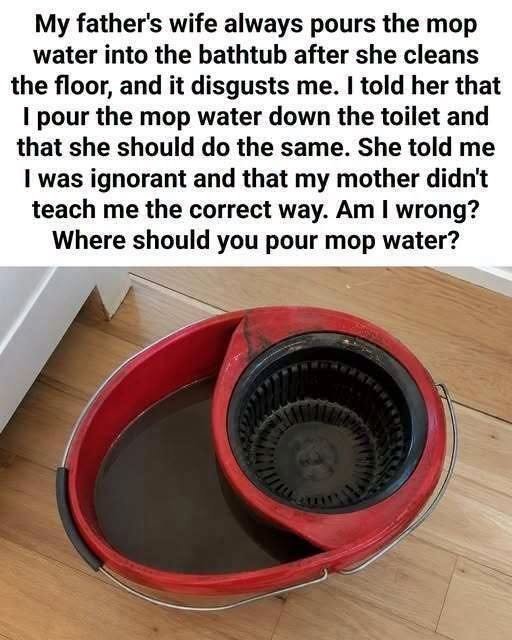
There is a very specific, deeply rewarding kind of satisfaction that comes from looking down at a freshly mopped, gleaming floor. The entire house suddenly smells clean and inviting, the pesky dust bunnies are finally banished from the corners, and for a brief moment, everything feels completely right in the world. But then, you look down at your mop bucket, and your heart sinks just a little bit. Staring back at you is a heavy gallon of gray, gritty, murky water that needs to go somewhere.
You carefully carry it to the bathroom, and suddenly, you are faced with a great, everyday household dilemma: Do I dump this incredibly dirty water in the toilet, or do I pour it into the bathtub?
Living alone at 73, I have come to realize that the little, routine daily chores are exactly where we either protect our peace of mind or invite unnecessary stress into our lives. Standing in the middle of the bathroom holding a heavy, sloshing bucket of dirty water, worrying about making a terrible mess, is enough to spike anyone’s blood pressure. Since I am incredibly proactive about my cardiovascular health—keeping a close and careful eye on my circulation, watching out for the early warning signs of strokes, and trying to understand those sudden, unexplained purple blotches on my arms—I absolutely refuse to let a simple household chore cause me physical strain or mental anxiety.
So, instead of rushing, I put the kettle on, grabbed my favorite warm mug of ginger tea, and looked into the actual fluid dynamics and plumbing science behind this classic mop water dilemma. Let us uncover the truth together about where that dirty water really belongs, how you can protect your expensive bathroom fixtures, and how to properly reward yourself after a job well done.
The Great Dilemma: Toilet vs. Bathtub
When professional home cleaners and experienced plumbers look at this common dilemma, they are not just thinking about where the water goes down the drain. They are actively thinking about messy splash zones and long-term surface damage. Here is exactly why neither the toilet nor the bathtub is actually the perfect choice for your mop water.
The Toilet: A Hidden Hygiene Hazard
It seems perfectly logical to pour dirty mop water directly into the toilet. After all, that is where household waste naturally goes. However, from a strict hygiene and cleanliness standpoint, this is a major mistake. A standard toilet bowl is quite small and curved. When you try to pour a heavy, unstable gallon of water from a wide bucket into that tiny space, it creates a massive, uncontrollable splash zone.
You are literally splashing microscopic droplets of floor dirt, sticky pet dander, and kitchen grease onto the toilet seat, the porcelain rim, the shiny flush handle, and maybe even your nearby toothbrush! If you absolutely must use the toilet because you have no other choice, you must pour the water incredibly slowly down the very back curve of the bowl to minimize the mess. However, it is always best to avoid the toilet entirely.
The Bathtub: A Scum and Scratch Trap
The bathtub is large, wide, and very easy to pour a heavy bucket into. But remember, a bathtub is designed for cleaning bodies, not for catching the debris from dirty floors. Mop water is absolutely full of fine grit, dust, loose hair, and often harsh chemical floor degreasers.
When you dump that mixture into the tub, the dirt and chemicals leave a stubborn, grayish scum ring around the beautiful porcelain or fiberglass that you then have to spend extra time scrubbing off. Worse yet, the fine sand and hidden grit in the dirty water can cause permanent micro-scratches in the glossy finish of your tub. Over time, these tiny scratches make the tub look dull and actually make it much harder to clean in the future because dirt gets trapped in the microscopic grooves. Furthermore, the wet hair and heavy grit can easily bypass your standard drain cover and clog your plumbing pipes deep within the walls.
For Complete Cooking STEPS Please Head On Over To Next Page Or Open button (>)

What To Do If Bitten By An Assassin Bug: A Practical Guide to Protection and Care
That Mysterious Slab of Granite in Your Kitchen? Boomers Knew It Was a Heat Pad—Here’s Why

Yarrow-Infused Healing Tea

Butter Swim Biscuits !!!

4-Ingredient Poor Man’s Saltine Toffee: The Easy Old-Fashioned Treat Everyone Loves