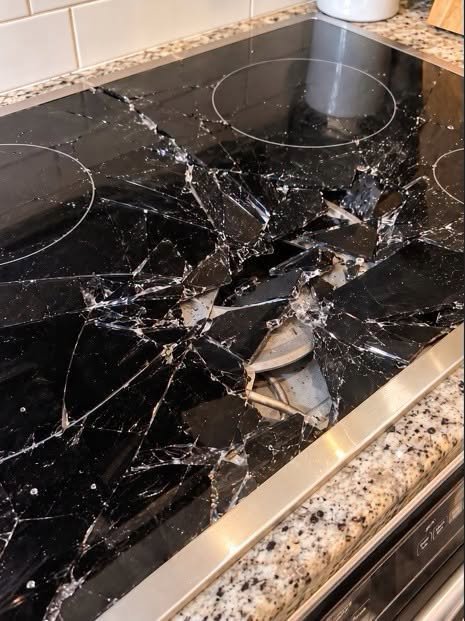
The Glass Cooktop Mistake That Can Cause Damage
Glass-top stoves are beautiful, easy to clean, and convenient for everyday cooking. But their smooth glass-ceramic surface needs a little extra care.
One simple mistake worth avoiding is placing a very hot pan, lid, or other heat-retaining object directly onto a cooler area of the cooktop
The sudden temperature difference can create thermal stress, and in some situations, that may contribute to cracking or other damage.
Why Hot Objects Can Be a Problem
- Glass cooktops are designed to handle the heat produced during normal cooking, but they aren’t indestructible.
- A hot lid or heavy pan can concentrate heat on a small section of the surface. Combined with the temperature difference between that area and the surrounding glass, this can put unnecessary stress on the cooktop.
- Impact is another concern. Dropping a heavy pan or banging cookware onto the surface can cause chips or cracks.Why Hot Objects Can Be a Problem
- Glass cooktops are designed to handle the heat produced during normal cooking, but they aren’t indestructible.
- A hot lid or heavy pan can concentrate heat on a small section of the surface. Combined with the temperature difference between that area and the surrounding glass, this can put unnecessary stress on the cooktop.
- Impact is another concern. Dropping a heavy pan or banging cookware onto the surface can cause chips or cracks.
Be Careful With Cast Iron
Cast-iron cookware is heavy and holds heat for a long time. Some glass cooktops allow cast iron, while others have specific recommendations.
If your manufacturer permits it:
Lift the pan instead of dragging it.
Avoid dropping or banging it onto the surface.
Keep the bottom clean and free from rough debris.
Don’t place a very hot cast-iron pan onto a cool section of the cooktop.
Always check your appliance’s instructions for cookware recommendations.
What To Do After Cooking
A few simple habits can help protect your cooktop:
Turn the burners off when you’re finished.
Place hot cookware on a suitable heat-resistant surface.
Let the cooktop cool naturally.
Avoid pouring cold water onto a very hot surface.
Clean it according to the manufacturer’s instructions.
Also, avoid using the cooktop as extra counter space. Plastic, paper, towels, and other heat-sensitive items can melt, scorch, or create a safety hazard if the surface is still hot.
Avoid Scratches
Don’t drag heavy pots, pans, or other cookware across the glass.
Before cooking, check that the bottom of your cookware is clean, smooth, and free of stuck-on food or rough particles. Even small pieces of debris can create pressure points under a heavy pan.
What If the Glass Cracks?
If you notice a significant crack, chip, or other damage, it’s safest to stop using the cooktop and check the manufacturer’s instructions.
Don’t cover a crack with tape and continue cooking, and don’t attempt a homemade repair. Depending on the damage, professional inspection or replacement may be necessary.
For Complete Cooking STEPS Please Head On Over To Next Page Or Open button (>)

What To Do If Bitten By An Assassin Bug: A Practical Guide to Protection and Care
That Mysterious Slab of Granite in Your Kitchen? Boomers Knew It Was a Heat Pad—Here’s Why
Yarrow-Infused Healing Tea
Butter Swim Biscuits !!!
4-Ingredient Poor Man’s Saltine Toffee: The Easy Old-Fashioned Treat Everyone Loves